The Problem
Automatic tracking meant I never actually noticed what I was spending.
My first attempt was basically a Rocket Money clone, made with Claude Code: connect your accounts through Plaid, watch the numbers update. I scrapped it. It worked, but it had the same problem as the spreadsheets before it. Because everything pulled automatically from my bank accounts, I never actually noticed how much I was spending as I spent it.
I needed something manual. If I have to log it myself, I can’t forget I spent it. Envelope budgeting is an old method: divide your income into named envelopes, spend from each one, and stop when it’s empty. I built a version that runs entirely on my phone, with no accounts and no syncing, that opens, logs a transaction, and is done in a few seconds.
How It Grew
A working version in a few days, then months of refinement.
The first version had the core loop: envelopes, a numpad for logging a transaction, and a close-month ritual to reset for the next one. Everything after that shipped in small, dated updates as I actually lived with it.
Built with Claude Code
This was my first app. I’d built websites before, but never shipped something people install and use daily. I built it entirely with Claude Code.
- May 24: Colors, variable income, sortable history. More envelope colors to customize with, a mode to track income as it arrives through the month instead of one fixed number, and the ability to sort transaction history.
- June 3: Forgive deficit, reset envelope. When closing a month, an envelope that went over budget can start fresh at full budget instead of carrying the penalty forward. Any envelope can also be reset to what its balance should be given what was actually spent. I added this because a single large purchase could leave an envelope deep in the negative for a long time, and I wanted a clean way to reset it instead of staring at a stuck deficit every month.
- July 2: History search, spending summary. Search transaction history by description or category, and a new tab showing a donut-chart breakdown of spending across envelopes with a 3-month rolling average. The rolling average is there so that after a few months I can actually see how much I'm spending in each category and reassess the envelope budgets to be more accurate, instead of guessing.
- Aug 3-4: Backup, move money between envelopes. Export and restore all data as a single file, and move accumulated balance from one envelope to another without changing either one's budget.
Ideas that weren't mine
Several of these came directly from the handful of friends and family using it, not from me: variable income mode, more envelope colors, sorting history by date or category, and the confetti that plays when you close out a month under budget.
Screens
The app, in use.
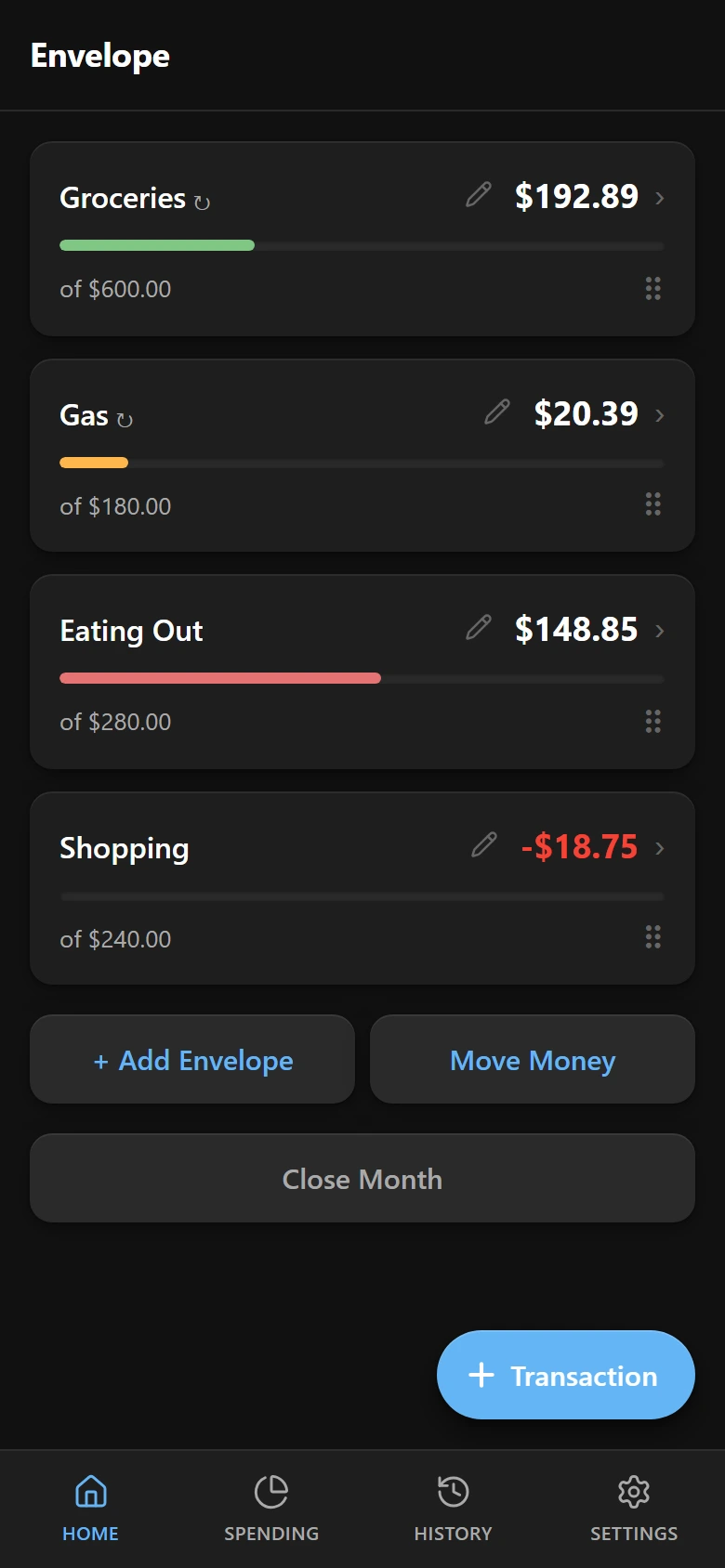
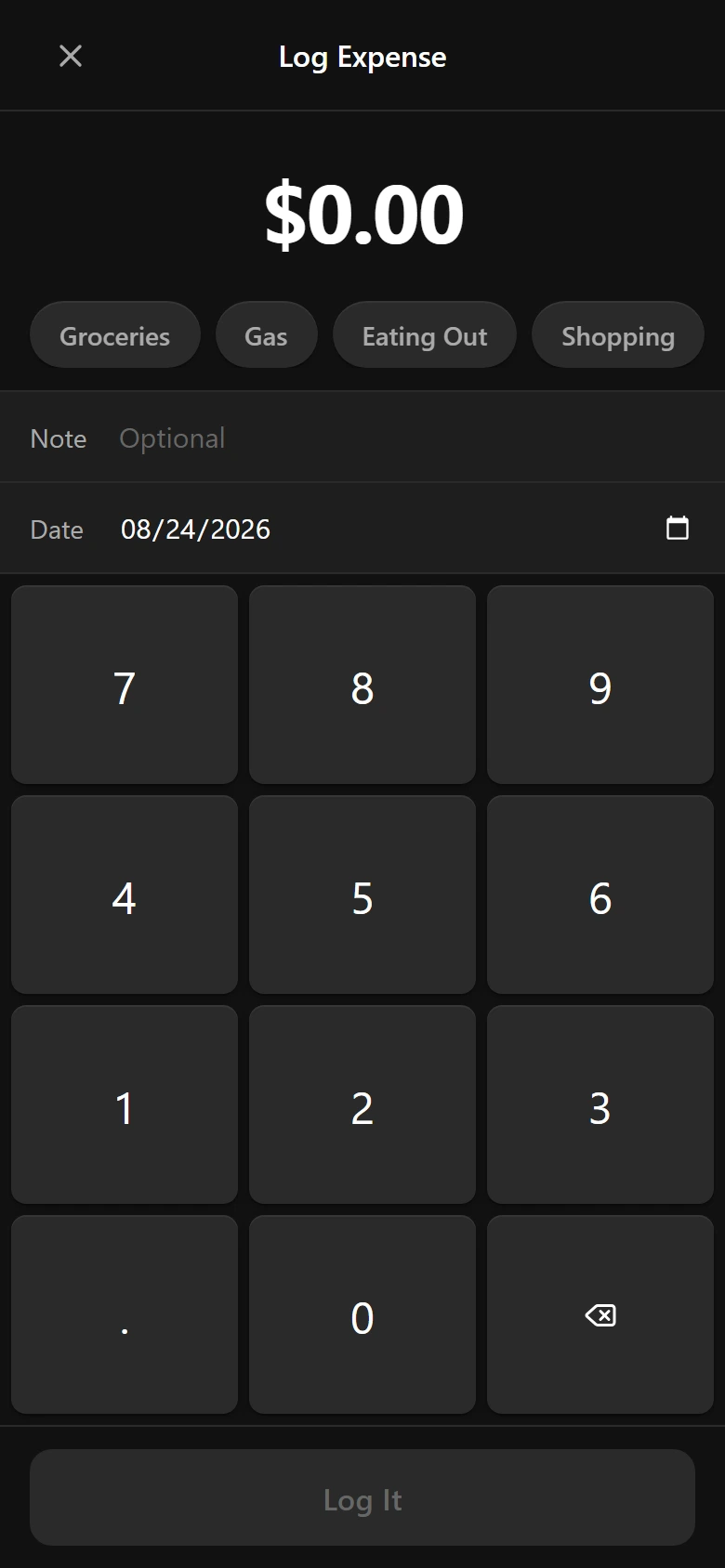
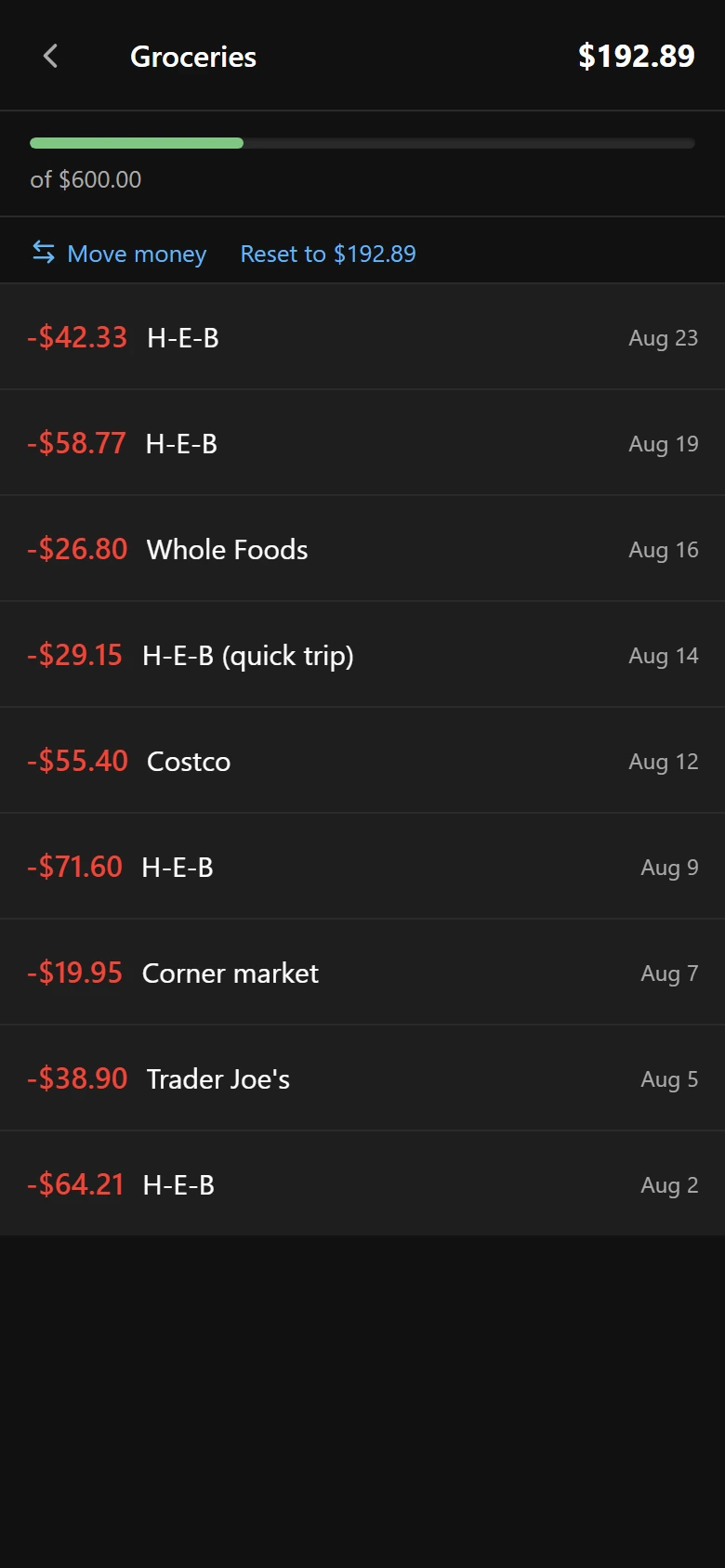
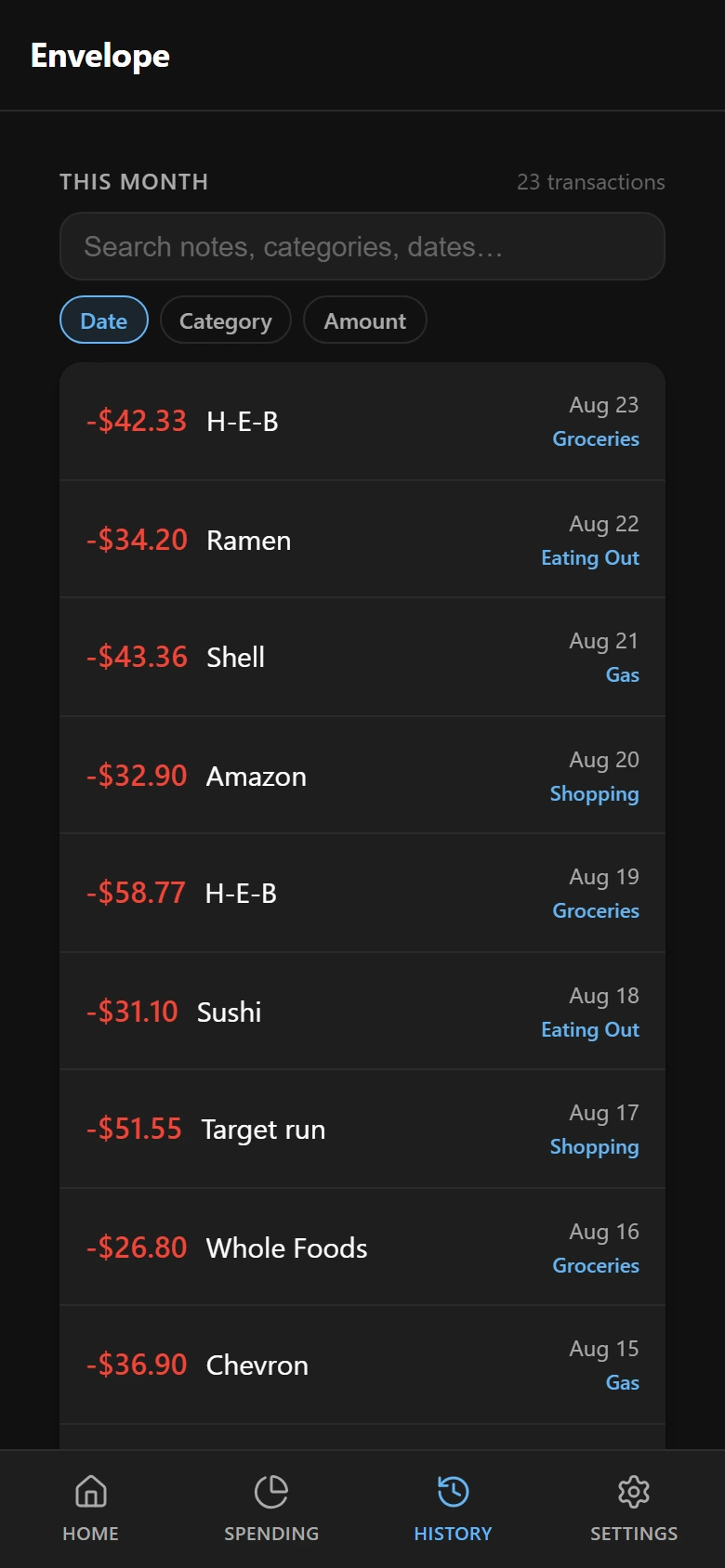
The core loop: check the dashboard, log a transaction, drill into an envelope, search history.
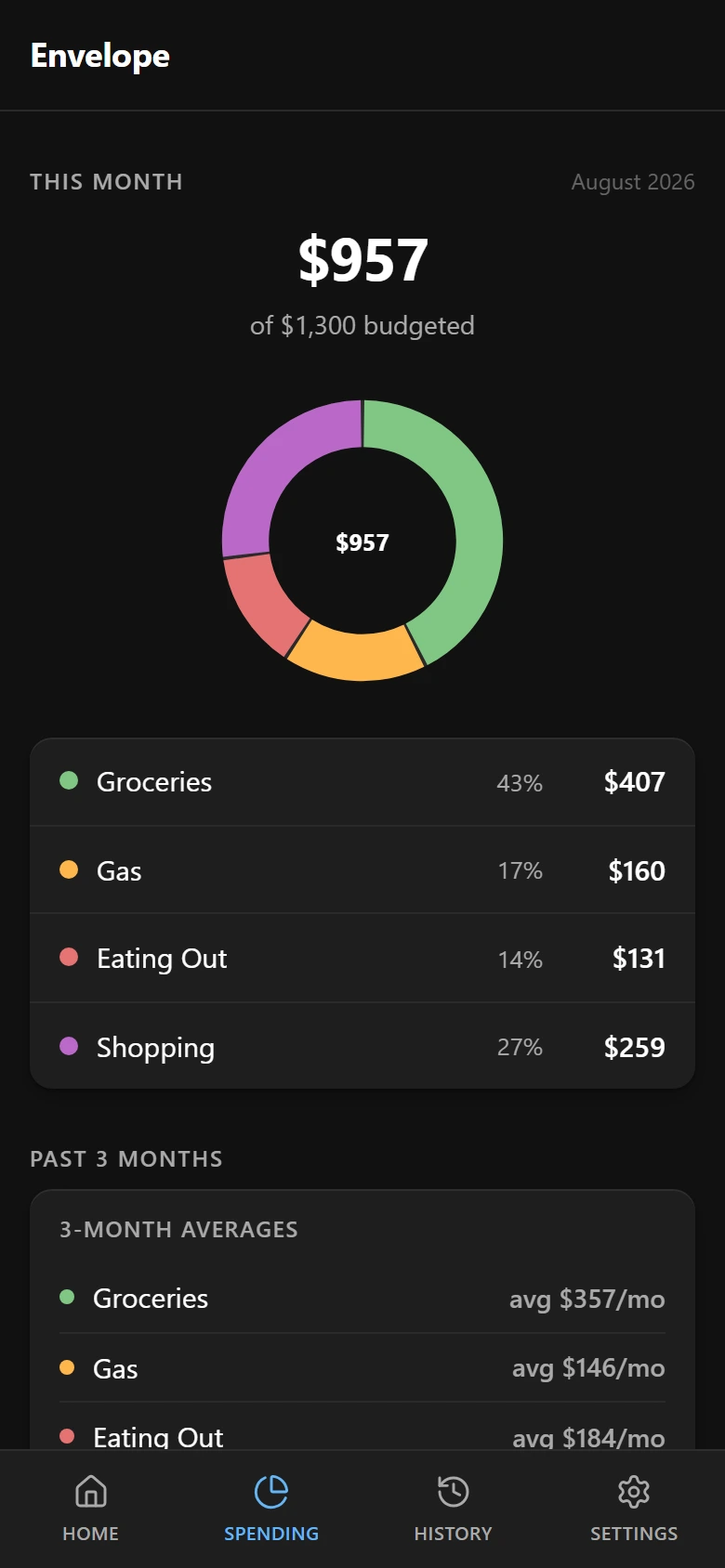
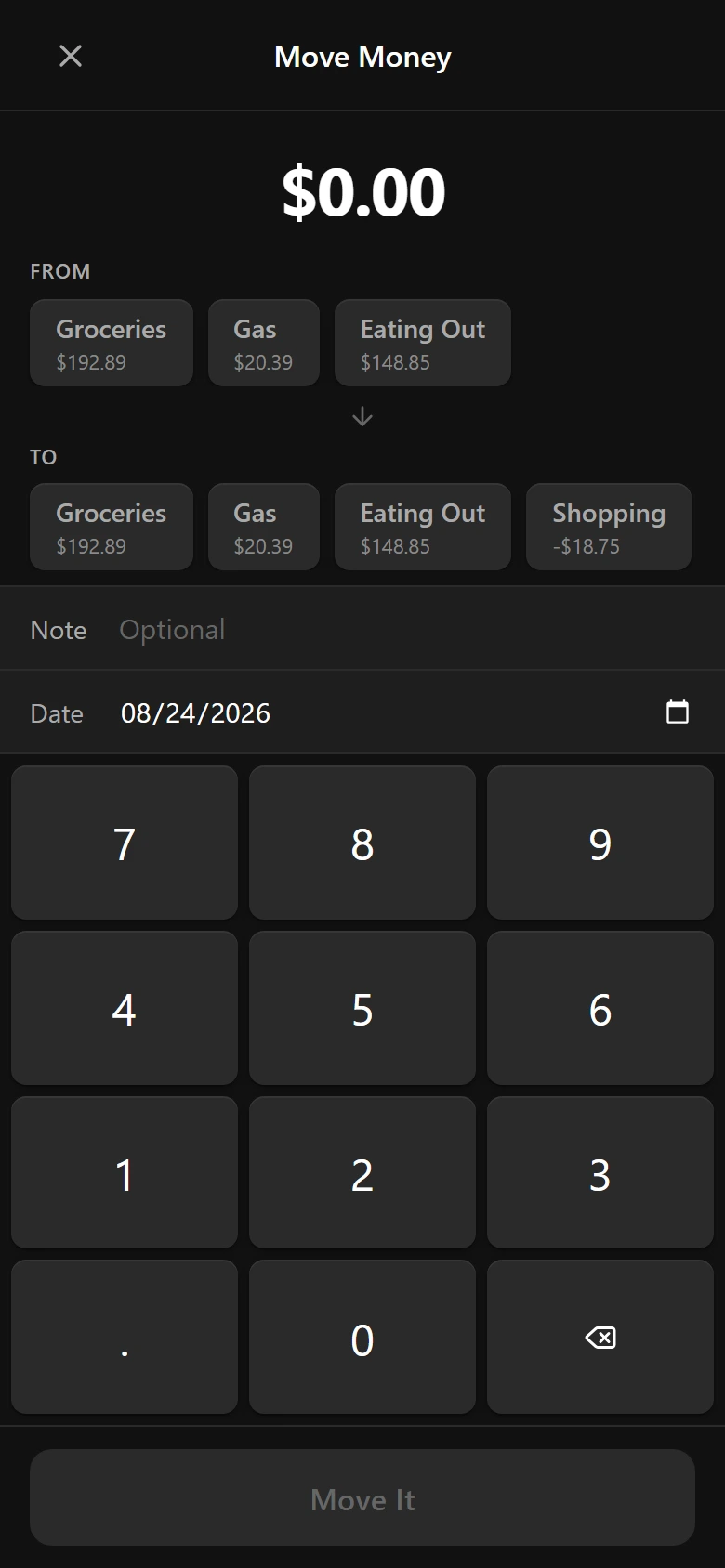
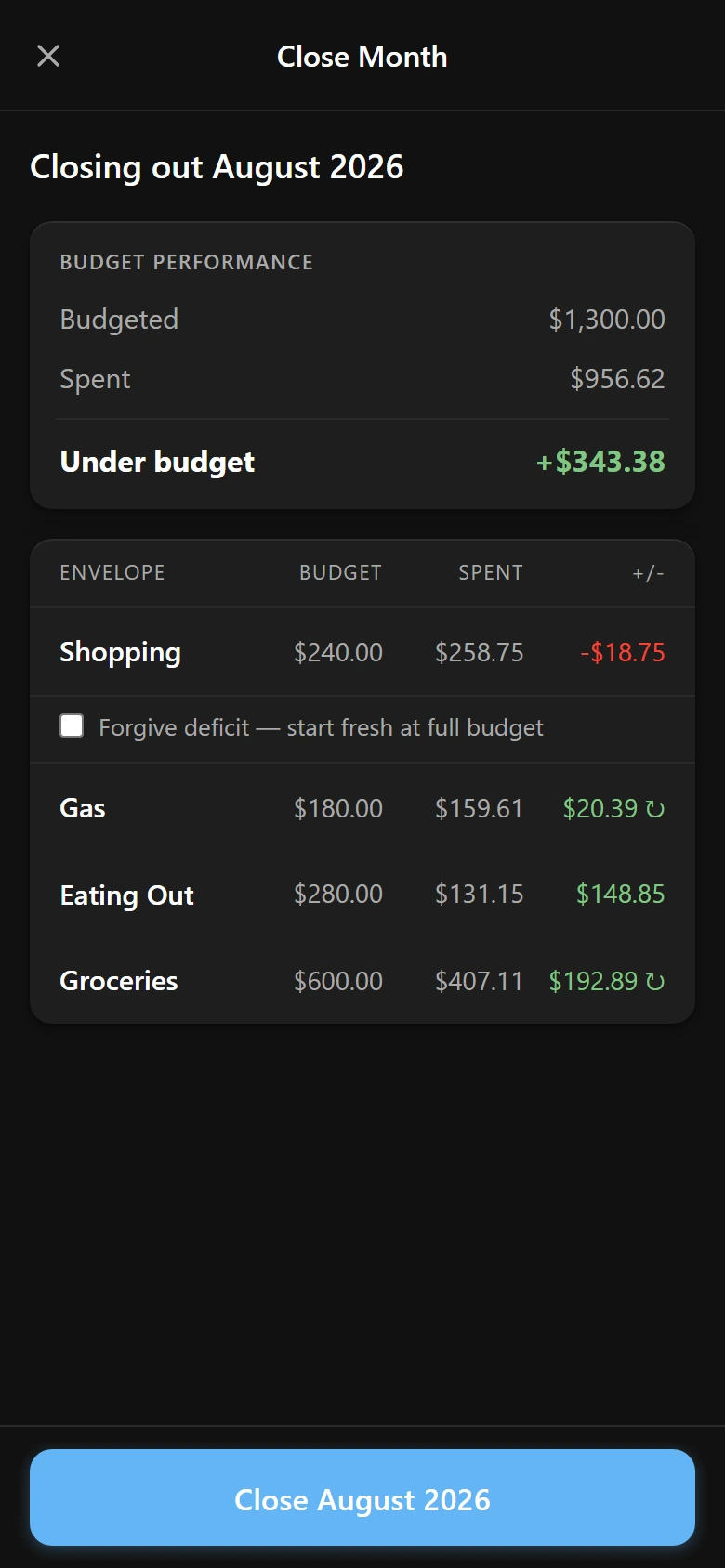
What came later: a 3-month spending average, moving money between envelopes, and closing out the month.
Real Outcome
I use it every time I spend money.
Otherwise it’s useless. My fiancée uses it every day too, and my brother and two friends are on it as well — five of us in total, including me. Most of what got added after v1 came out of what they said.
The real change: I used to be able to estimate what I spent on groceries. Now I actually know. I noticed I was eating out more than I realized, and that small one-off shopping purchases, like a gift or something I needed unexpectedly, were adding up more than expected. The biggest pattern was that I was front-loading spending early in the month and running dry by the end. Seeing that let me actually spread things out and keep something in reserve.
What I'd Do Differently
Build the feature list before the app.
If I knew everything I know now, I’d spend way more time upfront figuring out what features I actually wanted. The app had to exist before I could figure out what it needed. Some of that could have been solved with harder research up front, though, so features would have shipped as one considered whole instead of feeling like they were bolted on top of each other one at a time. Move money between envelopes is the clearest example: I hadn’t thought of it at all in the first version, and it’s since become one of the more important features in the app.
Takeaways
What this taught me.
Learning to actually use Claude Code
Building this taught me how to instruct it well for an app, not just a website: how to get it to do its own research, check its own work, and use documents and skills to streamline what it does. It also taught me that Claude has a default design style, and that building something that doesn't look like a generic Claude Code app takes a deliberate effort to break away from it.
I spend more than I think I do
Before this, I had a spreadsheet with what I thought my budget categories should be. Once I had real data, groceries came in about $100 more than I'd estimated, and eating out was higher too. Having the real numbers let me regulate my spending and reassess the budget instead of guessing.
Know the actual problem before you build the solution
I started out wanting to build something like Rocket Money, without asking what problem I was actually trying to solve. Once I identified that the real problem was that automatic bank syncing kept me from noticing my own spending, the solution came together quickly. Without knowing the problem, you don't know the solution.